
Benefits of Installing Himalayan Pink Salt Walls in Your Spa
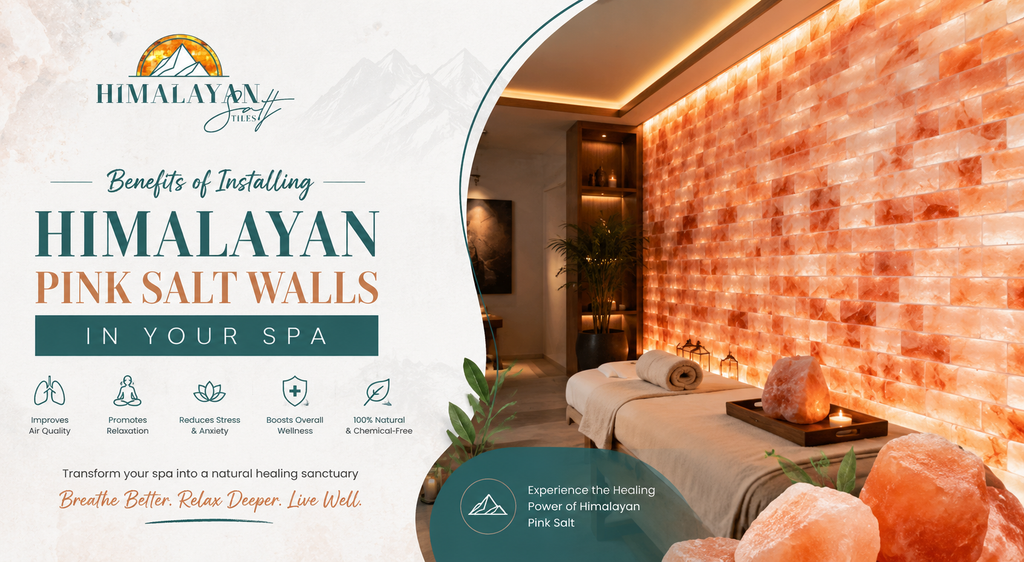
Walk into a spa with a Himalayan salt wall and you notice it before anyone explains what it is. The wall glows a soft rose-orange when it's backlit, the room smells faintly mineral, and the air feels different than the hallway you just left. That reaction is exactly why spa owners keep asking about Himalayan Pink Salt Walls: they change how a room feels, and that's most of what a spa is selling.
Here's what a salt wall actually does for your space, and where it fits.
What is a Himalayan Salt Wall?
A Himalayan salt wall is built from Himalayan dsalt bricks, thick slabs cut from salt deposits in the Punjab region of Pakistan, stacked or mortared into a panel and usually lit from behind or within. Some builds use larger salt blocks as a single panel; others use smaller bricks in a running-bond pattern, similar to laying regular brick, so the wall reads as texture rather than a flat sheet.
Color varies by mine and cut, ranging from pale pink to deep amber-red, which is part of why no two salt walls look identical.
The Air Quality Argument
The most-cited reason for installing a salt wall is air quality. Salt is hygroscopic, meaning it draws moisture out of the air. In a heated room like a sauna or steam-adjacent lounge, that can measurably reduce humidity buildup and the musty smell that comes with it.
Some practitioners of halotherapy (salt therapy) also argue that warmed salt releases negative ions and fine salt particles into the air, and that breathing this air can ease congestion or support respiratory comfort. This claim comes from halotherapy proponents and hasn't been settled by large clinical trials, so it's worth presenting to guests as a wellness tradition rather than a medical guarantee. What's not in dispute is the humidity effect and the fact that many guests report the room simply smells cleaner. Spas building out a full halotherapy corner alongside the wall often pair it with other spa salt products for the same room.
Salt Walls Built for Sauna and Steam Heat
Himalayan salt bricks for sauna and spa use are cut and finished specifically to handle sustained heat and moisture cycling, which is different from what a decorative salt lamp needs to survive. A brick installed near a sauna heater will expand and contract slightly as the room heats and cools; a properly cured, well-jointed brick handles that without cracking.
This is the detail worth checking before you buy: ask your supplier whether the bricks are rated for sauna-adjacent installation, not just as accent tiles. A wall that looks identical to a sauna-grade one can behave very differently after six months of daily heat cycles. Bricks are typically set with a heat-safe salt adhesive rather than standard tile mortar, since regular grout doesn't hold up the same way against repeated humidity swings.
Ambiance That Photographs Well
Spas live and die by repeat bookings and word of mouth, and a backlit salt wall is one of the few features that photographs as well in person as it does on Instagram. The warm light reads as calming rather than clinical, which matters in a category where most competitors default to white walls and frosted glass.
Guests take photos of it. Those photos end up on review sites and social posts without you asking. That's free marketing that a generic tile wall doesn't generate.
Low Maintenance, If You Install It Right
Salt is naturally antimicrobial to a degree, since bacteria struggle to survive on a dry salt surface. In practice, that means a well-ventilated salt wall needs less scrubbing than tile or painted drywall in the same room.
The trade-off: salt walls need airflow and a dry base to avoid surface pitting over years of use. A supplier who's actually installed these in commercial spas, not just sold the bricks, will talk you through drainage and ventilation before the sale, not after.
Where It Fits in a Spa Layout
Himalayan salt walls for spa use show up in a few common spots:
- Sauna interiors, where the heat activates the humidity-drawing effect
- Relaxation lounges, where backlighting does most of the work and heat exposure is minimal
- Treatment room accent walls, often paired with salt tiles sized for smaller feature areas
- Reception areas, where the visual impact alone justifies the cost even without heat exposure
Each placement has different brick and lighting requirements, so it's worth telling your supplier where the wall is going before you order.
What to Ask a Supplier Before You Buy
A few questions separate a wall that lasts from one that needs replacing in two years:
- Are the bricks rated for sauna or high-humidity installation, or are they decorative-grade only?
- What's the sourcing, and can they confirm mine origin?
- Do they provide installation guidance for drainage and airflow, or just ship the bricks?
- What's the warranty on cracking or discoloration?
If a supplier can't answer these directly, that's worth noting before you commit to a full wall. Our own FAQ page covers sourcing and care questions we get most often, and it's a fair benchmark for what any supplier should be able to answer.
Final Thought
A salt wall is a real construction project, not a decorative add-on you bolt onto an existing room. It's worth getting bricks from a supplier who understands spa and sauna environments specifically, not just retail salt products. Himalayan Salt Tile stocks Himalayan salt bricks and tiles built for sauna and spa installation, with sourcing and specs available on request. Browse the full salt tile and brick collection or contact us directly for a quote on your build.