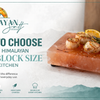
Uses of Himalayan Salt Blocks & How to Clean It in 2026

If you have ever seen a thick pink slab of salt at a kitchen store and wondered what it is actually for, this guide is for you.
A Himalayan salt block may look decorative, but it is a practical tool for cooking, serving, and chilling food. You can cook on it, serve food on it, chill it in the fridge, and even use it to build a spa room. Once you understand how it works, the whole thing makes complete sense.
This guide covers every way to use one, exactly how to clean and store it, and what to check before you spend a single dollar.
What Is a Himalayan Salt Block?

A Himalayan salt block is a solid slab of natural rock salt mined from the Khewra Salt Mine in Punjab, Pakistan, one of the world's oldest and largest salt mines. The pink color comes from iron and 84 trace minerals, including magnesium, potassium, calcium, and zinc, that are naturally present in the salt.
Blocks are cut in different thicknesses, usually between 1 inch and 2 inches, and in different sizes depending on what you want to use them for.
What makes them special is how they retain heat. A thick salt block heats up slowly, distributes heat evenly across the entire surface, and holds that heat for a long time. The same works in reverse. Put one in the fridge, and it stays cold far longer than a regular plate or tray.
Why Cooks Actually Like Using One
People who try a Himalayan salt cooking block once usually keep coming back to it, and not just because it looks good on the table.
When food sits on a hot salt block, two things happen at the same time. The high heat sears the outside of the food and locks in the moisture. At the same time, the salt surface seasons the food lightly and evenly from the bottom up in a way that tastes noticeably different from just sprinkling salt on top.
Salt is also naturally antibacterial. Bacteria cannot survive on a high-salt surface the way they can on a wooden cutting board or a scratched plastic one. That is a genuine practical advantage, not just a talking point.
The other thing worth knowing is that a salt block improves with use. After ten or fifteen cooking sessions, it builds up a slightly seasoned surface that adds more depth to whatever you cook on it. A used block often cooks better than a brand-new one.
How to Heat Your Salt Block for the First Time
This is the step that most people skip, and it is the main reason salt blocks crack early.
There is natural moisture inside every salt block. If you heat it too fast, that moisture turns to steam before it can escape, and the pressure breaks the block from the inside. It happens quickly, and there is no fixing it.
The solution is slow, gradual heating. It only needs to be done the first few times carefully, and it becomes easier after that.
Step-by-step first heat
Make sure the block is fully dry and at room temperature; never start from cold
Put it on the stovetop at the lowest heat setting
Leave it on low for 15 minutes
Turn it up to medium and leave it for another 15 minutes
Turn it to high and wait until the surface is fully hot
To test if it is ready, flick a few drops of water onto the surface. If they sizzle and disappear within two seconds, the block is hot enough to cook on. If they pool or evaporate slowly, give it a few more minutes.
You will probably notice small hairline cracks after the first or second time you heat it. This is normal and does not mean the block is broken. Most blocks that develop these lines early end up being the most durable ones over time.
Every Way to Use a Himalayan Salt Block
Cooking on the Stovetop
Stovetop cooking is the most popular use and the easiest place to start. Salt blocks work on gas burners and electric stoves. For induction stoves, you will need to preheat the block in the oven first since salt does not activate induction heat directly.
The ideal foods to prepare on a salt block are those that are thin and dry, rather than saucy or heavily marinated.
Foods that work really well:
Scallops and shrimp: 2 to 3 minutes per side, no oil needed
Thinly sliced beef or lamb gets a great sear in under 4 minutes
Salmon, halibut, or other firm fish: place skin side down first
Asparagus, snap peas, and broccolini: the heat brings out a natural sweetness
Eggs: crack them straight onto a medium-hot block, and they will cook gently with a light salt flavour.
One thing to watch: do not let acidic foods sit on the surface for long. Tomatoes, lemon juice, and vinegar-based marinades eat into the salt. A quick squeeze of lemon on the plate after cooking is fine; just do not marinate directly on the block.
Grilling
Grilling with a salt block gives you the smoky outdoor flavor of a grill but without flare-ups, because the block sits between the flame and the food.
Put the block on the grill before you light it. If you use charcoal, start it on the cooler side first and move it over the coals once it has warmed up. For a gas grill, use the same 15-minute heat steps as the stovetop method.
Once it is hot, lamb chops, whole prawns, and thick slices of vegetables all do particularly well. The flavor you get is smoky and mineral at the same time; it is genuinely different from a standard grill.
Using It in the Oven
Using a salt block in the oven needs one extra step compared to stovetop cooking.
Never put a cold block directly into a hot oven. The sudden temperature change will crack it. Instead, heat it on the stovetop first using the gradual method, then carefully move it into the oven on a metal tray for support.
Root vegetables, fennel, and thick mushrooms roasted on a salt block develop a concentrated, slightly sweet flavor with a mineral edge that you just do not get from a regular baking tray.
Serving Cold Food on a Salt Block
This one is often overlooked, but it might be the easiest way to impress people at a dinner party.
Put the block in the fridge for two hours or in the freezer for 45 minutes before serving. It will retain its cold temperature on the table for over an hour, much longer than a regular plate.
It works especially well for:
- Sashimi and sushi, where keeping the surface cold actually matters for food safety
- Sliced cheese, which picks up a gentle mineral flavor as it sits
- Charcuterie, where the cool surface keeps the fat in the meat firm
- Oysters and cold shellfish
- Chilled fruit platters in summer
The visual of a pink salt slab loaded with food on a table always gets noticed. People always ask about it.
Cooking at the Table
This is an underused way to use a salt block that makes for a great shared meal.
Heat the block fully in the kitchen, carry it to the table on a heat-proof mat, and let people cook their own thin strips of meat, prawns, or vegetables directly on the surface. The block stays hot long enough for a whole table to cook on it without any extra flame underneath.
It functions similarly to a DIY teppanyaki or Korean BBQ setup, is interactive and enjoyable, and allows the food to season itself as it cooks.
Himalayan Salt Blocks for Spa Use: Salt Therapy
Himalayan salt is also widely used outside the kitchen, especially in wellness and spa settings. Many buyers now explore these blocks for spa use, salt therapy, and calming interior spaces because they add a warm, natural feel to the environment. If you have ever walked into a salt room at a spa, you have probably noticed that it feels different from a standard room.
What Is Salt Therapy?
Salt therapy, also called halotherapy, involves spending time in a salt-rich environment and is often used in wellness spaces to support relaxation and respiratory comfort. The idea has been around for a long time. In the 1800s, European doctors observed that salt mine workers appeared to have fewer breathing issues than many other workers. A Polish doctor, Felix Boczkowski, wrote about this in 1843 after studying miners in the Wieliczka salt mine.
Some modern studies have also explored how salt-based environments may help support breathing in certain settings. Salt rooms are not a medical treatment, but this is one reason they remain popular in spas and wellness spaces.
How a Himalayan Salt Room Actually Works
Himalayan salt tiles and bricks, when gently warmed by lighting or low-heat wall panels, interact with the moisture in the surrounding air. Salt naturally draws moisture toward it, and as it does, it releases mineral-rich air back into the room. This raises the negative ion count in the air and reduces airborne particles.
The result is a space that feels calm, warm, and visually distinctive, which is one reason salt rooms remain popular in wellness settings.
Where People Are Using Salt Tiles in 2026
Salt tiles and bricks are being used in a lot of different settings now:
Salt therapy studios: fully tiled rooms where clients sit for 30 to 45 minutes per session
Home saunas: salt tile walls alongside heat panels are a popular home wellness upgrade
Yoga and meditation studios: the warm pink light and cleaner-feeling air help people stay focused
Children’s rooms: Some families also use salt tiles in home wellness spaces because they like the soft glow and natural look
Hotel and resort spas: a dedicated salt room is now a standard feature at high-end wellness facilities
If you are planning a home spa or a commercial wellness room and looking for a salt tile sale in Canada or the United States, Himalayan Salt Tile supplies tiles, bricks, and full salt panels sourced directly from Pakistan, with delivery across both countries.
How to Clean a Himalayan Salt Block
Cleaning a salt block is simple, but the key rule is to use as little water as possible.
Salt dissolves in water. The more water you use to clean the block, the more surface you lose each time. Keep it minimal, and the block lasts much longer.
The Right Way to Clean It
After every cook:
- Let the block cool down fully first; after high-heat cooking, this can take 45 minutes to an hour. Do not rush this step
- Take a clean sponge, dampen it slightly, and wring it out until it is just barely moist.
- Wipe the cooking surface in circles to lift any food residue
- For anything stuck on, use a stiff brush alongside the damp sponge; do not use metal scourers or abrasive pads
- Wipe the surface again immediately with a dry cloth
- Stand the block upright or on a rack and let it air dry for at least 30 minutes before putting it away
What you should never do:
Run it under the tap, or leave it sitting in water; even 30 seconds under a running tap causes real damage
Put it in the dishwasher
Use dish soap or any cleaning product; the salt surface absorbs it, and you will taste it in your next meal
Put it away while it is still damp
Because the surface is naturally antibacterial, a light clean is genuinely all you need. Bacteria do not survive on salt; that is why salt has been used to preserve food for thousands of years.
What to Do With Stuck-On Food
If something has dried onto the surface, use a stiff brush and a tiny bit of coarse salt as a light scrub with a barely damp cloth. This handles almost anything without soaking the block.
If the surface has darkened in spots after cooking, that is seasoning, not damage. A dark patch on a salt block means it has been used well.
How to Store Your Salt Block
How you store a salt block matters almost as much as how you cook and clean it. Salt pulls moisture out of the air around it constantly. In a humid kitchen, a block left sitting uncovered near the sink can start showing damp spots within days.
Simple storage rules:
1. Keep it away from steam; don't store it near the kettle, dishwasher, or stovetop
2. Don't store it next to the sink or on an open shelf in a humid room
3. Wrap it loosely in brown paper or a plain cloth if your kitchen tends to be humid
4. Keep it on a wooden rack or slats rather than flat on a shelf; airflow underneath stops moisture from building up
5. If possible, store it with the cooking side facing up
In a dry climate, you can leave it on the counter without wrapping it, and it will be fine. In a humid or coastal environment, wrapped storage in a dry cupboard is the right call.
What to Look for When You Buy Himalayan Salt Blocks
Quality varies a lot between suppliers, and a low-quality block shows its problems fast.
Check these things before buying:
Thickness: For home stovetop cooking and serving, a 1-inch thick block is the ideal standard, offering a perfect balance of quick heating and durability. If you plan on heavy-duty outdoor grilling or professional oven use, upgrading to a 2-inch brick provides extra thermal mass for sustained high heat.
Where it comes from: Real Himalayan salt only comes from Pakistan. Ensure your supplier sources directly from the Khewra region to guarantee mineral density.
Natural color blocks range from pale pink to deep rose, which are normal. Large grey or white patches can mean higher impurity levels
Surface condition: Small surface marks and internal veining are signs of natural salt. Avoid blocks with deep structural cracks that split the entire slab before its first use.
Size: An 8 x 8-inch block is a good starting size for one or two people. A 12 x 8-inch block works for family meals and doubles as a serving platter
If you are looking to buy Himalayan salt blocks for cooking at home or serving at the table, make sure you are buying from a supplier that sources directly from Pakistan and offers a proper thickness for cooking use.
Size Guide: Which Block Do You Need?
|
What You Want to Do |
Size to Get |
Thickness |
|
Cooking for 1 to 2 people |
8" x 8" |
1" minimum |
|
Cold serving & table-side display |
12" x 8" or 8" x 8" Block |
1” |
|
Family meals and grilling |
12" x 8" |
1.5" |
|
Table-side cooking for a group |
12" x 8" |
2" |
|
Salt therapy walls and spa rooms |
Tiles and bricks |
Varies |
|
Commercial builds or bulk orders |
Custom sizes |
2"+ |
Buying Wholesale Himalayan Salt Bricks in the USA and Canada
If you are building a salt therapy room, a spa feature wall, or any large-scale salt installation, buying individual blocks retail is not practical. You need consistent quality across a large number of bricks, the same color, the same density, and the same dimensions, so the finished wall looks uniform.
The standard size for salt room construction is an 8 x 4 x 2-inch brick. When you buy Wholesale Himalayan salt bricks in USA or Canada, the per-unit price drops significantly compared to buying in small quantities, and you have better control over consistency across the whole order.
Himalayan Salt Tile handles bulk orders for wellness studios, spas, yoga spaces, and hospitality builds across both countries. Whether you need enough bricks for a single accent wall or a fully tiled room, they supply direct from Pakistan with wholesale pricing for commercial buyers.
Mistakes to Avoid
Heating it too fast. This is the number one reason blocks crack. Fifteen minutes at each heat level is not optional. It is how you protect the block.
Using too much water when cleaning. A barely damp sponge is all you need. A wet cloth will eat into the surface every single time.
Storing it somewhere humid. Salt absorbs moisture from the air. A block stored near a sink in a humid kitchen can deteriorate fast.
Buying one that is too thin. Anything under an inch is not a cooking tool. It is a decoration.
Letting acidic things sit on it. A splash of lemon on the plate is fine. Anything acidic left directly on the surface for more than a minute will erode it.
Expecting it to season heavily. The block seasons gently, not boldly. If you like strong salt flavor, season your food as usual and let the block add its own subtle layer on top.
FAQs
Can you cook eggs on a Himalayan salt block?
Yes, and it works better than you might expect. The heat is even, there are no hot spots, and the block adds just enough salt that you do not need to add more. Use medium heat and crack the eggs straight onto the surface.
How long will a salt block last?
With proper heating and dry storage, most blocks last two to five years of regular use. The two things that shorten a block's life fastest are heating it too quickly and storing it somewhere damp.
Does food cooked on a salt block have less sodium?
Usually yes. The salt gets into the food through surface contact rather than being added directly, which tends to mean less overall sodium than salting in a pan. Himalayan salt also contains 84 trace minerals, including magnesium and potassium, which refined table salt does not have.
Does the block's flavor change over time?
It does, and usually for the better. As you cook on it more, the surface builds up a light seasoning from previous sessions that adds a bit more depth to the flavor. Most people who use salt blocks regularly prefer one that has been used for a while over a brand-new one.
Can you use a salt block on an induction stove?
Not directly, because salt does not generate induction heat. The easiest workaround is to heat it in the oven first, then bring it to the table on a trivet for serving or table-side cooking.
What foods should you keep off a salt block?
Anything highly acidic, such as tomato-based sauces, citrus halves, and vinegar marinades, will wear down the surface noticeably over time. Very wet or saucy food does the same thing through moisture alone. Stick to drier preparations for best results and longest block life.
How do you know when a salt block needs replacing?
Surface pitting and dark patches are just signs of normal use. When you start seeing cracks that go all the way through the block, or the surface has worn down so unevenly that it will not heat properly, it is time for a new one.
Conclusion
A Himalayan salt block can become a useful kitchen tool when used and cared for properly. It is a natural cooking and serving surface that adds gentle seasoning and can last for years with proper care.
Whether you are cooking a simple dinner, putting together a cold platter for guests, or looking into Himalayan salt blocks for sale for a spa or wellness project, the same rule applies: buy the right thickness, from the right source, and treat it properly.
You can explore cooking blocks, salt tiles, and wholesale salt bricks through Himalayan Salt Tile if you are comparing options for home or commercial use.
-
Posted in
Himalayan Salt, Himalayan Salt blocks